
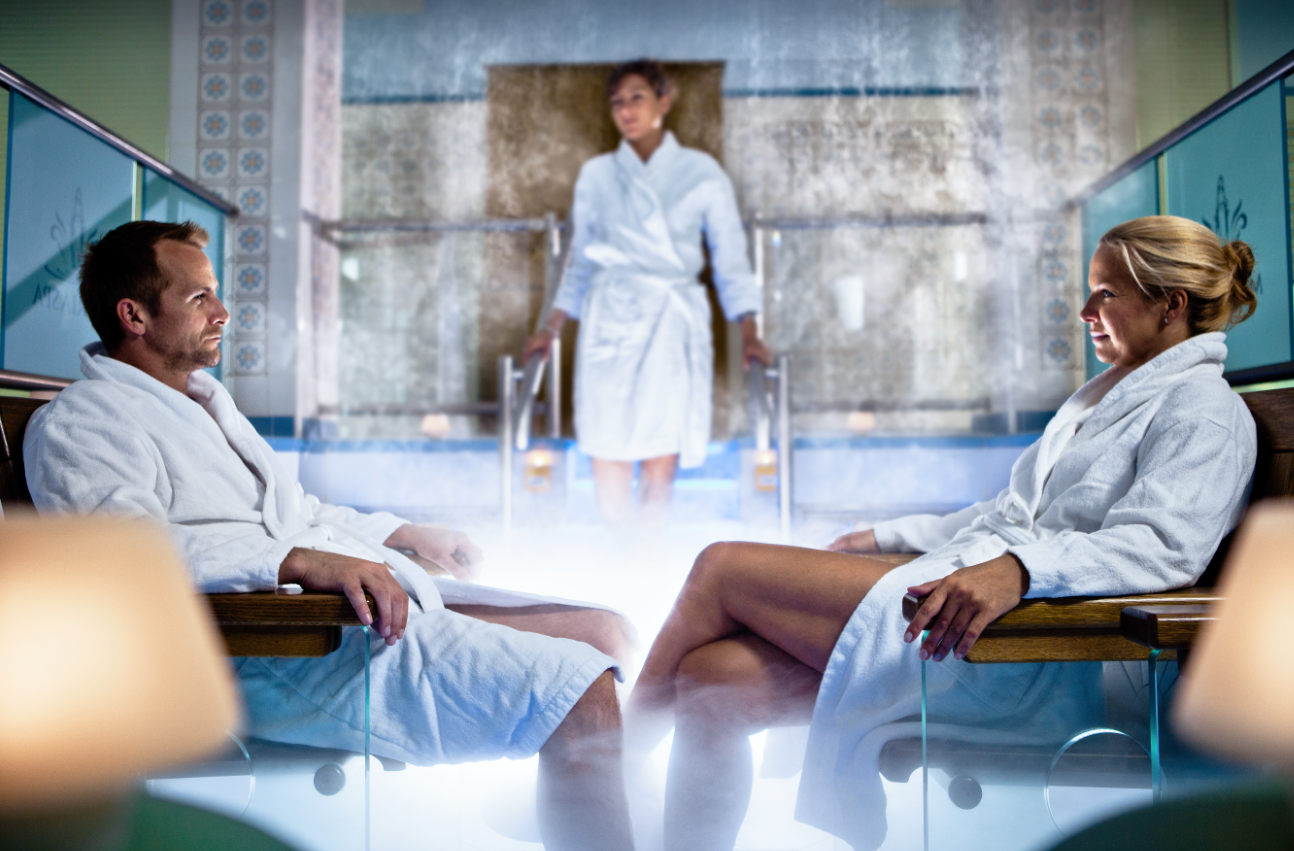
Poles are interested in Czech spas not only for short stays, but they also want to stay for a whole week. This was demonstrated by the OPEN POLSKA pilot project, which was organized by the Czech Tourism Authority—CzechTourism and the Živý kraj Destination Agency in collaboration with seven hotels in West Bohemia. The goal was to determine how attractive a longer spa stay in Czechia is to Polish guests and to increase interest in Czech medical wellness. A total of 89 Poles took advantage of the opportunity to participate in the project, and 100% of respondents expressed satisfaction with their stay at Czech spas in a follow-up questionnaire survey. More than half of them reported, based on their own assessment, that they felt an improvement in their health. The results will now serve as the basis for creating packages for week-long stays through Polish travel agencies, as well as for further promotion.
Selected hotels have confirmed Poles' interest in domestic spas
Seven hotels in Karlovy Vary, Mariánské and Františkovy Lázně have prepared a limited number of discounted seven-night packages. Discounts ranged from 30 to 50%. CzechTourism’s foreign office in Poland then presented the offer to local media, partners, and the public. Individual hotels subsequently handled reservations and took care of guests.
This was not a typical discount promotion. Western Bohemia is famous for its world-renowned spas, but after 1989, the number of Polish guests began to decline significantly. Their return is still hindered primarily by persistent stereotypes and a lack of awareness of what today’s spas have to offer. The project therefore sought to answer a key question: Are today’s Czech spas attractive enough to Polish guests for them to spend a whole week there?
The organizers wanted to attract the first guests with discounted rates, motivate them to try week-long stays focused on medical wellness, and gather authentic reviews for CzechTourism’s future marketing communications. At the same time, they tracked their journey from the initial inquiry through the reservation process to their experience at the hotel.
“Our northern neighbors are close to us; they know Czechia and love to come back. Still, we must constantly seek new ways to show them other facets of our country and strengthen its reputation abroad. The OPEN POLSKA program is a great example of what a good idea combined with hard work can achieve. We owe our thanks for this initiative to our colleagues at our foreign office in Poland, the Živý kraj Destination Agency, and all the participating hotels,“ says František Reismüller, Director of the Czech Tourist Authority – CzechTourism, adding: „Longer stays, especially outside the peak season, benefit not only spa towns but also their surrounding areas. A guest who stays for a whole week doesn’t just spend money at the hotel. They go to restaurants, visit sights, shop, use other services, and go on trips even beyond the city limits. Their stay thus supports local businesses and helps preserve jobs throughout the region.“
Satisfaction with Not a Single Negative Response
A total of 89 guests participated in the project, completing 50 individual stays. After returning home, they filled out 36 questionnaires—one per room. Most arrived as couples, so one person typically responded on behalf of the pair. The organizers thus received evaluations for 36 of the 50 stays that took place, or 72% of the total.
All respondents rated their week at the spa positively. A total of 47% of them said they were absolutely thrilled, another 47% were very satisfied, and the remainder were satisfied. No one was bored during the week. This was despite the fact that guests spent most of their stays from January through April, i.e., outside the peak season. 87% of respondents stayed for the full seven nights, 11% left a little earlier, and one person actually extended their stay.
The basic package included a medical consultation and one treatment. Fifty-nine percent of respondents purchased additional treatments—on average, one per day—and 8% underwent at least three treatments per day. At the same time, guests had plenty of time to relax, enjoy cultural experiences, and explore the surrounding area.
Of course, a one-week stay cannot replace a traditional spa treatment lasting several weeks. The packages therefore combined prevention, relaxation, and exploring the region. According to their own reports, 58% of all respondents felt an improvement in their health during their stay, and among those aged 50–70, the figure was as high as 78%. The survey captured guests’ personal feelings and did not assess the clinical effects of spa care.
Most guests went on at least one excursion. They most often recommended Karlovy Vary. They also frequently mentioned Cheb, Mariánské Lázně, Loket, and Františkovy Lázně, including the surrounding areas. Other recommendations included the SOOS Nature Reserve and Kladská. They gave nature an average rating of 5.72 on a six-point scale. In the hotels, they most appreciated the staff, the spa facilities, the comfort of the beds, breakfast, and the treatments. All received a score of more than 5.60. The project also attracted younger people and first-time spa visitors. A quarter of those surveyed had not yet turned 50, and 36% were visiting a spa for the very first time.
Neither distance nor language deterred the guests
Before the project launched, Poles often mentioned that the West Bohemian spas were too far away. However, the reality turned out to be much better. A total of 97% of respondents described the trip as hassle-free or acceptable. Only one person described it as difficult, but also noted that the stay was worth the longer trip.
Three people admitted that communication was sometimes difficult, but everyone managed to understand each other in the end. Only one respondent identified language as a real problem. Most often, guests combined Polish with Czech, or used English or German. Nevertheless, Polish plays an important role even before departure, when prospective guests search for information, compare prices, and book their stays. Furthermore, one-third of respondents had no idea what to expect from Czech spas before their trip. The results thus show that low awareness of what Czech spas have to offer poses a greater obstacle than distance or communication barriers.
The decision to book was based on the overall offer
The campaign generated a total of 268 inquiries for the participating hotels. Prospective guests subsequently booked 58 stays, and 50 of them actually took place. Thus, roughly one in five inquiries led to a booking. Individual hotels performed differently: they converted between 13% and 65% of inquiries into bookings.
“We were delighted by the exceptional satisfaction of our guests, and we were surprised that the size of the discount wasn’t the deciding factor in making a reservation. The hotel with the lowest discount—30%—performed best in converting inquiries into reservations. Polish guests need an attractive market price, a clear offer, and quick, helpful communication—ideally in Polish. Czech spas are world-class and deserve a broad international clientele. Opening up a new market for them isn’t easy, so we’re glad to see the first results,“ adds Tomáš Zukal, director of the CzechTourism foreign office in Poland.
„We’ve been targeting the Polish market for a long time, and the growing number of Polish visitors shows that our efforts are paying off. Until now, however, Poles have primarily come here for sightseeing and active vacations. We therefore wanted to also reach out more to clients interested in spa tourism, wellness, and shorter stays in our spa towns. Thanks to excellent cooperation with the CzechTourism International Office in Poland and our partners in the region, we have managed to take an important step in this direction. Among the activities was, for example, a familiarization trip for Polish doctors, who were able to experience spa care firsthand and, during a meeting with representatives of the Institute of Spa Medicine and Balneology, learn about current trends in modern spa tourism. “I believe that it is precisely this personal experience and long-term cooperation with our Polish partners that will help us attract more guests to the region,”” summarizes the chairman of Destination Agencies “Živý kraj” Petr Židlický.
The activities do not end with the evaluation of the survey. In the next phase, the participating partners will prepare clear, weekly packages for Polish travel agencies and jointly assess their commercial potential. Sales—now without the discount promotion—will also be supported by media presentations, collaborations with influencers, and familiarization trips for journalists and travel agency representatives.
About the OPEN POLSKA Program
The pilot program by CzechTourism and the destination agency Živý kraj launched in November 2025. Hotels accepted reservations through the end of January 2026, stays ended no later than May, and the organizers collected feedback through mid-July. Participating hotels included ASTORIA, IMPERIAL, and THERMAL in Karlovy Vary; DĚVÍN, ENSANA CENTRÁLNÍ LÁZNĚ, and FALKENSTEINER in Mariánské Lázně; and MONTI in Františkovy Lázně. The organizers received 36 completed questionnaires from guests out of 50 stays that took place. The response rate thus reached 72%. The reported health benefits are based on the respondents’ subjective assessments and do not constitute a clinical evaluation of the stay’s effects.
COMPLETE REPORT ON THE QUESTIONNAIRE SURVEY